

Table of Contents
ToggleLovable vs Custom Software Development: Which Is Better in 2026?
Let’s Talk About the Real Question
If you’re looking into tools like Lovable, you’re probably trying to figure out one thing:
Can I just build this quickly or do I need something more serious?
And that’s a fair question.
Because in 2026, AI-powered builders like Lovable are making it incredibly easy to turn ideas into working apps in a matter of hours.
But here’s the thing most people realize a little too late:
What works fast in the beginning doesn’t always work when things start growing.
So instead of giving you a generic answer, let’s break this down in a way that actually helps you make the right call.
What Is Lovable (And Why It’s Getting Popular Fast)
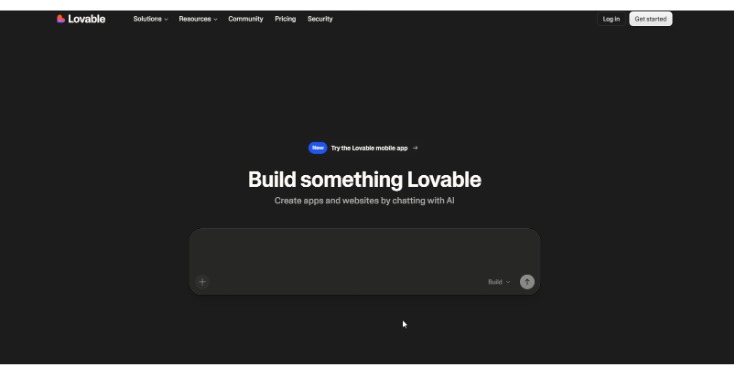
Lovable is part of a new wave of AI-driven app builders that focus on speed, simplicity, and accessibility.
You don’t need to be a hardcore developer. You just describe what you want, and the platform helps you build it.
Why People Are Using Lovable
- You can go from idea to app very quickly
- Minimal technical setup
- AI helps generate code and structure
- Great for prototyping and testing ideas
- Beginner-friendly
For founders and small teams, this feels like a huge advantage.
Where Lovable Starts Showing Limitations
This is the part that doesn’t get enough attention.
Lovable is great for getting started, but it’s not designed for everything.
The Real Constraints
- Limited flexibility for complex features
- Platform dependency since you are building inside their system
- Performance can become an issue as usage grows
- Harder to customize deeply
- Scaling beyond a certain point can get tricky
So yes it’s fast.
But it’s not always future-proof.
Let’s Break It Down Like It Actually Happens
Say you start with Lovable.
Here’s a very normal scenario:
- Platform cost: $30 to $100/month
- Extra tools, integrations, upgrades: $50 to $200/month
- Occasional dev help when something breaks: $300 to $1,000 here and there
Now stretch that over a year:
- Tools + platform: around $1,000 to $3,500
- Fixes + support: around $2,000 to $6,000
So realistically, you’ve already spent:
$3,000 to $9,000+
And your app is still kind of limited.
Now This Is Where It Hits
Your product starts getting traction.
More users. More data. More expectations.
And suddenly
- Things slow down
- You can’t build certain features
- Integrations start getting messy
- You hit platform limits
At this point, there’s usually only one option left.
You rebuild everything.
The Part No One Plans For
Now you move to custom development.
Here’s what that usually looks like:
- Full rebuild: $8,000 to $25,000+
- Data migration and fixes: $1,000 to $5,000
- Time lost: 2 to 6 months
Now add everything together:
- Your “cheap” start: $3,000 to $9,000
- Your rebuild: $10,000 to $30,000+
You’re now at $13,000 to $39,000.
And more important
You’ve lost time.
Now Compare That With Doing It Properly From Day One
Custom development upfront might look like:
$5,000 to $10,000
That’s it.
No rebuilding. No patchwork fixes. No platform limits.
Just something built properly from the start.
So What’s the Real Takeaway?
It’s not about what’s cheaper today.
It’s about how many times you end up paying for the same thing.
Because what usually happens is the following:
- You build fast
- You hit limits
- You rebuild
- You pay twice
And that’s the part no one tells you in the beginning.
What Custom Software Development Really Means
Now let’s switch gears.
Custom software development is about building a solution from the ground up specifically for your business.
No shortcuts. No restrictions from platforms.
Everything is designed around your exact needs.
Why Custom Development Still Dominates for Serious Products
Even with all the AI tools out there, businesses that are thinking long-term still rely heavily on custom development.
What You Get With Custom Software
- Complete control over features and architecture
- Built to scale as your business grows
- Stronger performance optimization
- Higher level of security
- Tailored user experience
This is what you choose when your software isn’t just a tool it is part of your core business.
Lovable vs Custom Software Development (Real Comparison)
Let’s break it down clearly.
Speed
- Lovable extremely fast can launch in hours or days
- Custom takes longer but follows a structured approach
If speed is your only priority Lovable clearly wins.
Cost
- Lovable lower upfront cost
- Custom higher initial investment
But long-term costs can shift depending on growth and scaling.
Scalability
- Lovable limited for large-scale applications
- Custom designed to scale from the beginning
This is where many fast-built apps face challenges later.
Flexibility
- Lovable limited to platform capabilities
- Custom fully flexible with no restrictions
This becomes important when your idea requires unique functionality.
Security
- Lovable standard platform-level security
- Custom fully customizable security setup
This is critical for businesses handling sensitive or large volumes of data.
When Lovable Actually Makes Sense
Lovable is a great choice in the right situations.
You should consider it if:
- You are validating an idea
- You need an MVP quickly
- You are working with a limited budget
- You are experimenting or learning
- The product is not business-critical
This approach is all about moving fast and testing ideas.
When Custom Software Development Is the Smarter Move
Custom development becomes the better option when:
- Your product is central to your business
- You are planning to scale
- You need advanced or unique features
- Performance and reliability matter
- You want full control over your system
Most fast-built applications eventually hit limitations as they grow.
The Hidden Cost Most People Miss
Many businesses start with fast tools thinking they are saving time and money.
Later they run into challenges such as:
- Rebuilding the product from scratch
- Migrating data to a new system
- Fixing performance issues
- Facing unexpected platform limitations
What seemed like a quick and affordable start can turn into a costly rebuild.
The Missing Piece Most Businesses Don’t Think About
Choosing between Lovable and custom software is not just about the tool.
It is about how well your solution is planned from the beginning.
Even the best tools fail if they are not aligned with your long-term goals.
Successful businesses focus on:
- Knowing when to move fast
- Knowing when to build for scale
- Avoiding shortcuts that lead to rebuilding later
This level of clarity usually comes from experience.
A Simple Next Step
If you are still unsure which direction makes sense for your situation, you do not have to figure it out alone.
Sometimes a short conversation can save weeks or even months of mistakes.
At Growable Digital we focus on building scalable, future-ready software that aligns with your business goals, whether you are starting from scratch or planning to scale.
Final Thoughts
There is no single best option.
Lovable is great if you need speed and want to test ideas quickly.
Custom software is the better choice if you are building something long-term scalable and reliable.
The key is not choosing what is easiest today but what will continue to work as your business grows.
Once you think about it that way the decision becomes much clearer.
Frequently Asked Questions (FAQs)
Is Lovable better than custom software development?
Lovable is better for speed and simplicity, especially when building quick prototypes or MVPs. However, custom software development is better for long-term scalability, flexibility, and performance. The right choice depends on your business goals and growth plans.
Can Lovable replace traditional software development?
No, Lovable cannot fully replace traditional custom development. While it simplifies app creation, it has limitations in customization, scalability, and advanced functionality. Businesses with complex needs still rely on custom-built solutions.
Which is cheaper: Lovable or custom software development?
Lovable has a lower upfront cost, making it ideal for startups. However, custom software can be more cost-effective in the long run because it avoids rebuilds, platform limitations, and recurring tool expenses.
Is Lovable good for building production-level apps?
Lovable can be used for simple production apps, but it may struggle with high traffic, complex workflows, or deep integrations. For mission-critical or large-scale applications, custom development is usually the better option.
When should I choose custom software over Lovable?
You should choose custom development when your product is central to your business, requires advanced features, needs to scale, or demands high performance and security.
Is Lovable enough for startups?
Lovable is great for early-stage startups that want to validate ideas quickly. However, as the startup grows, many teams eventually transition to custom software for better control and scalability.
What are the limitations of Lovable?
Lovable’s main limitations include restricted customization, platform dependency, performance constraints at scale, and limited flexibility for complex features. These can become significant as your product grows.
How do I decide between Lovable and custom development?
Ask yourself whether you are building a quick test or a long-term product, whether you will need advanced features later, and whether you expect rapid growth. If you are testing, Lovable is a good choice. If you are building for scale, custom software is the better option.
Do businesses actually use Lovable for development?
Yes, many startups and small teams use Lovable for MVPs and prototypes. However, established businesses typically rely on custom software for critical systems and long-term growth.
What is the biggest risk of starting with Lovable?
The biggest risk is needing to rebuild your entire application later due to scalability, performance, or feature limitations, which can lead to extra cost and lost time.