

Table of Contents
ToggleNo-Code vs Custom MVP Development: The Truth Most Startups Learn Too Late
A lot of startup founders fall into the exact same trap.
At the beginning, the goal feels simple:
launch fast.
So they start searching:
- “best no-code tools”
- “AI app builders”
- “how to build SaaS without developers”
- “launch startup in 7 days”
Then YouTube starts feeding them videos saying:
“You don’t need engineers anymore.”
That’s where things start getting dangerous.
Because while no-code tools can absolutely help founders move quickly, the internet has started oversimplifying software development so much that many startups are building entire businesses on foundations that were never meant to scale long term.
And the worst part?
Most founders don’t realize the problem until growth finally starts happening.
Ironically, success is often what exposes the weakness.
The product gets users.
More workflows get added.
Customers request features.
The backend becomes more complicated.
Automations pile up.
Performance slows down.
Now the startup has a bigger problem than before:
They built momentum on top of limitations they don’t control.
That’s the side of no-code most people don’t talk about openly.
Especially the influencers selling the dream of “build million-dollar SaaS apps without developers.”
Because building a prototype and building a scalable software company are two completely different things.
And serious founders eventually learn that the hard way.
The Internet Made Software Development Look Easier Than It Actually Is
To be fair, no-code tools solved a real problem.
Startups needed faster validation.
Not every founder has:
- technical skills
- engineering teams
- huge funding
- months to build products
So platforms like Bubble, Webflow, Glide, and dozens of AI-powered builders exploded because they gave founders speed.
And honestly, for early validation?
That can be useful.
Very useful.
A founder can:
- test ideas
- create landing pages
- build lightweight workflows
- validate demand
- onboard beta users
without spending six figures immediately.
That’s a real advantage.
The problem starts when founders mistake the following:
“fast to launch”
for
“ready to scale.”
Those are not the same thing.
Not even close.
No-Code Works Great Until Complexity Shows Up
This is usually how the cycle goes.
At first everything feels amazing.
The product launches quickly.
Users sign up.
The interface works.
The founder feels validated.
Then real startup problems begin appearing.
Users want:
- custom workflows
- advanced permissions
- integrations
- analytics
- automation
- better performance
- mobile optimization
- AI functionality
Now things become messy.
Because most no-code platforms were designed for accessibility first.
Not deep scalability.
That distinction matters massively.
A lot of no-code systems begin struggling once startups need:
- flexibility
- infrastructure control
- complex backend logic
- scalable databases
- advanced product behavior
And suddenly the “easy” solution becomes complicated very fast.
The Hidden Problem Is Dependency
This is probably the most underestimated risk.
When startups use no-code or white-label systems heavily, they’re not truly building on their own infrastructure.
They’re building on someone else’s ecosystem.
Which means:
- pricing can change
- limitations can appear
- features can disappear
- APIs can break
- scalability can become expensive
- platform outages affect your business
That level of dependency becomes dangerous once revenue starts growing.
Because now your startup’s future partially depends on another company’s roadmap.
That’s a risky place to be.
Especially for SaaS startups trying to scale aggressively.
Most Founders Don’t Think About Scalability Early Enough
Honestly, this is understandable.
Early-stage founders are focused on survival.
Not infrastructure architecture.
But scalability problems compound quietly.
At 50 users, almost everything feels manageable.
At 5,000 users?
Completely different story.
Now performance matters.
Database efficiency matters.
API structure matters.
Backend architecture matters.
And this is where many startups discover their product foundation was never designed for growth in the first place.
That realization usually leads to one painful outcome:
a rebuild.
Rebuilding Software Is Brutal
This is something founders underestimate badly.
Rebuilding isn’t just “making a better version.”
It often means:
- migrating users
- rewriting infrastructure
- rebuilding workflows
- fixing technical debt
- handling downtime
- restructuring databases
- retraining customers
And rebuilding while actively running a startup is exhausting.
Especially because most founders thought they had already solved the technical side initially.
This is why experienced startup founders think differently about MVP development now.
The goal isn’t just launching quickly anymore.
It’s launching lean while still protecting future scalability.
That balance matters.
“Vibe Coding” Is Creating a Similar Problem
Right now there’s another trend happening:
AI-generated startup products.
And honestly, some of it is becoming reckless.
People are launching apps using AI-generated code without:
- architecture planning
- security thinking
- scalability considerations
- infrastructure strategy
- proper testing
The product looks functional on the surface.
But underneath?
The system is often fragile.
That’s becoming the modern version of technical debt.
AI can absolutely accelerate development.
That part is real.
But experienced product teams still matter because software is not just about generating code.
It’s about building systems that survive growth.
There’s a massive difference between:
- “it works”
and - “it scales.”
Custom MVP Development Gives Startups Control
This is where custom MVP development changes everything.
Instead of forcing your business into someone else’s limitations, custom software is designed around:
- your workflows
- your users
- your scaling plans
- your product vision
That flexibility becomes incredibly valuable later.
Especially once startups begin:
- iterating rapidly
- experimenting with AI
- improving onboarding
- adding automation
- scaling operations
Custom software gives founders room to evolve.
And startups evolve constantly.
The Best SaaS Products Usually Feel Different for a Reason
Think about the best software products you use.
They rarely feel generic.
That’s because strong SaaS companies optimize deeply around:
- user experience
- workflows
- performance
- product behavior
- onboarding
- retention
Custom product development allows startups to create those unique experiences.
No-code systems often struggle with that level of refinement because the underlying flexibility is limited.
That’s why many products built entirely on templates start feeling identical after a while.
And in crowded SaaS markets, generic products struggle.
White-Label Software Has the Same Long-Term Problem
White-label software follows a very similar pattern.
At first it sounds attractive:
- launch quickly
- add branding
- resell subscriptions
- avoid development costs
And yes, some businesses absolutely make money using white-label products.
But serious startups eventually run into the same issue:
they don’t fully control the product.
That creates limitations around:
- innovation
- customization
- differentiation
- scalability
- pricing flexibility
If 300 businesses are reselling the exact same software with different logos, competing becomes difficult.
Eventually everything turns into a pricing war.
That’s why long-term SaaS value usually comes from owning real technology infrastructure.
Not renting access forever.
No-Code Isn’t Bad. Misusing It Is the Problem
This is important.
No-code tools absolutely have a place.
They’re great for:
- rapid validation
- prototypes
- internal systems
- workflow testing
- admin tools
- landing pages
The problem is when founders try turning temporary startup shortcuts into permanent product infrastructure.
That’s usually where things break down.
Smart founders use no-code strategically.
Not blindly.
So What Should Startups Actually Do?
The answer depends on the stage of the company.
If you’re
- validating an idea
- testing demand
- proving market interest
Then lightweight no-code tools can absolutely help initially.
But if you’re building:
- scalable SaaS products
- AI startups
- marketplaces
- automation platforms
- long-term software companies
Then custom MVP development becomes significantly more important.
Because eventually, product flexibility becomes a competitive advantage.
And flexibility requires ownership.
The Smartest Startups Think Long-Term Earlier Than Everyone Else
This is one of the biggest mindset differences between experienced founders and newer founders.
Experienced founders understand speed matters.
But sustainable infrastructure matters too.
They know shortcuts eventually create tradeoffs.
That doesn’t mean overengineering products from day one.
It means making smart technical decisions early enough that growth doesn’t become painful later.
That balance is where strong MVP strategy lives.
Why Startups Work With Growable Digital
A lot of development agencies focus purely on building features.
But startups need more than coding.
They need:
- product thinking
- scalability planning
- lean execution
- startup-focused strategy
- flexible architecture
That’s where Growable Digital approaches MVP development differently.
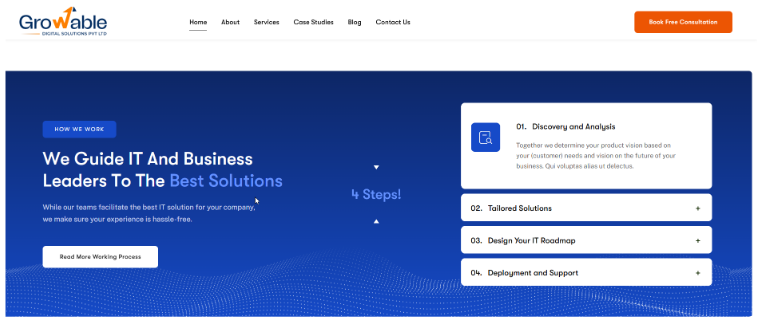
Instead of pushing unnecessary complexity early, the focus stays on building scalable custom software foundations that can actually evolve with the startup over time.
Whether founders are building:
- SaaS products
- AI platforms
- startup marketplaces
- automation tools
- custom software systems
Growable Digital helps startups move beyond fragile short-term solutions and toward software products built for real long-term growth.
If you want a deeper breakdown of MVP strategy, startup product development, SaaS architecture, scalability planning, and custom software growth, explore Growable Digital’s complete guide:
MVP Development Company: Complete Startup Guide to Building an MVP in 2026
FAQs About No-Code vs Custom MVP Development
Is no-code good for startups?
Yes, no-code can work well for rapid validation, prototypes, internal tools, and lightweight MVPs during early startup stages.
Why do startups eventually rebuild no-code products?
Most startups rebuild because of scalability limitations, performance issues, workflow restrictions, and growing product complexity.
Can no-code apps scale successfully?
Some can scale moderately, but many startups eventually outgrow no-code infrastructure once user growth and complexity increase.
What is custom MVP development?
Custom MVP development means building software specifically around a startup’s workflows, scalability needs, product goals, and future growth plans.
Why is custom software better long term?
Custom software provides:
- ownership
- scalability
- flexibility
- better performance
- stronger differentiation
- advanced integrations
which become increasingly important as startups grow.
What are the biggest risks of white-label software?
White-label systems often create:
- dependency on providers
- weak differentiation
- customization limitations
- scalability restrictions
Can AI replace software developers completely?
AI can accelerate development significantly, but experienced engineers are still needed for architecture, scalability, security, infrastructure, and product strategy.
When should startups move from no-code to custom software?
Startups should usually consider custom development once:
- user growth increases
- workflows become complex
- scalability matters
- performance issues appear
- product differentiation becomes important
Do startups need scalable architecture from day one?
Startups do not need enterprise overengineering early, but they should still build on foundations that won’t collapse during growth.
What’s the biggest mistake founders make with no-code?
The biggest mistake is assuming that fast launch automatically means long-term scalability.