

Table of Contents
ToggleBest Business to Start in 2026, Build a SaaS and Earn Monthly Income, Step-by-Step Guide
Let’s Be Honest for a Second
If you’re thinking about starting a business in 2026, you’re probably stuck in that loop.
Scrolling through ideas. Watching videos. Reading blogs. Seeing people say dropshipping, freelancing, agencies, content creation.
And deep down, you’re thinking
Is any of this even worth it anymore?
Because everything feels crowded. Everyone is doing the same thing. And most of it looks good on the surface but doesn’t really build anything long term.
So let’s cut through all of that.
If you’re serious about building something that actually grows, something that makes money while you sleep, something that doesn’t depend on constant hustle,
Then SaaS is hands down one of the best businesses you can start in 2026.
Not because it’s trendy.
Because it works.
What Is SaaS?
Let’s not complicate this.
SaaS stands for Software as a Service.
In simple terms, it means you build a software product and people pay to use it on a monthly or yearly basis instead of buying it once.
Think about the tools you already use.
When you pay for something like a design tool, a CRM, or a project management platform every month, you are using SaaS.
You are not buying the software.
You are subscribing to it.
That’s the key difference.
Instead of making money one time from a customer, you keep earning from them as long as they use your product.
For example, imagine you build a simple tool that helps businesses manage their leads.
Instead of selling it for a one time fee, you charge 20 dollars per month.
Now imagine:
- 10 customers = 200 dollars per month
- 100 customers = 2000 dollars per month
- 1000 customers = 20000 dollars per month
Same product.
Same system.
But your income keeps growing.
That is why SaaS is so powerful.
You are not just building a product.
You are building a system that generates recurring revenue.
Real SaaS Companies Making Serious Money
Now let’s make this real for a second.
This is not theory. These are actual SaaS companies that started small, solved a clear problem, and now generate massive recurring revenue.
1. Notion
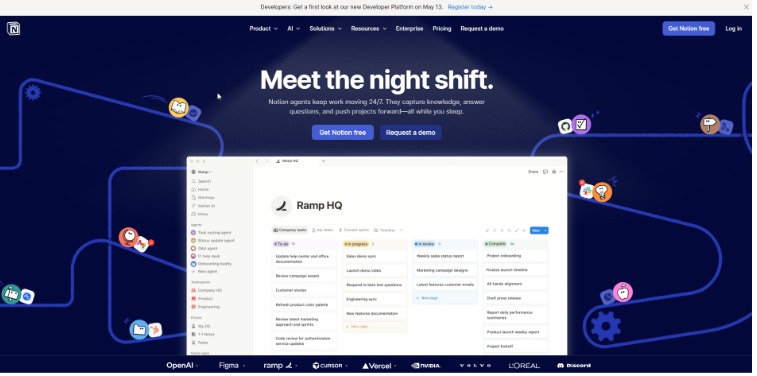
Notion started as a simple productivity and note-taking tool.
What they do:
They help individuals and teams organize everything in one place. Notes, tasks, databases, docs, all combined.
Problem they solved:
People were tired of switching between multiple tools for notes, tasks, and collaboration. Notion combined everything into one clean system.
Pricing:
Free plan available
Paid plans start around $10 per month per user
Estimated Annual Revenue:
Over $300 million annually
Source:
https://www.businessofapps.com/data/notion-statistics/
2. Shopify
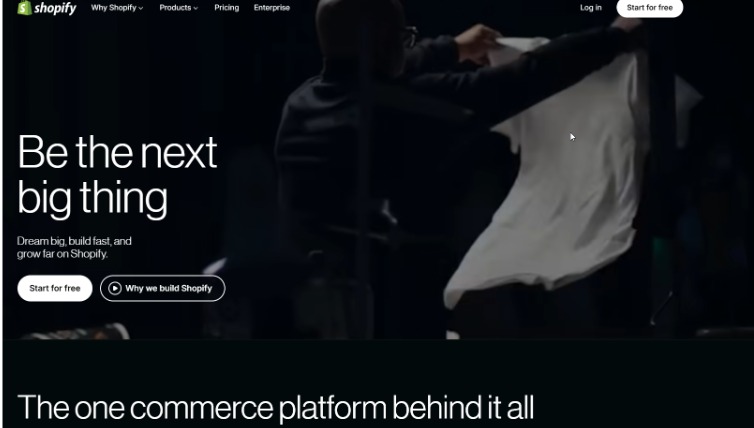
Shopify is one of the biggest e-commerce SaaS platforms in the world.
What they do:
They allow anyone to create an online store without needing technical skills.
Problem they solved:
Building an e-commerce website used to be complicated and expensive. Shopify made it simple and accessible.
Pricing:
Starts at around $39 per month
Annual Revenue:
Over $7 billion annually
Source:
https://www.shopify.com/news/shopify-earnings
3. Bannerbear
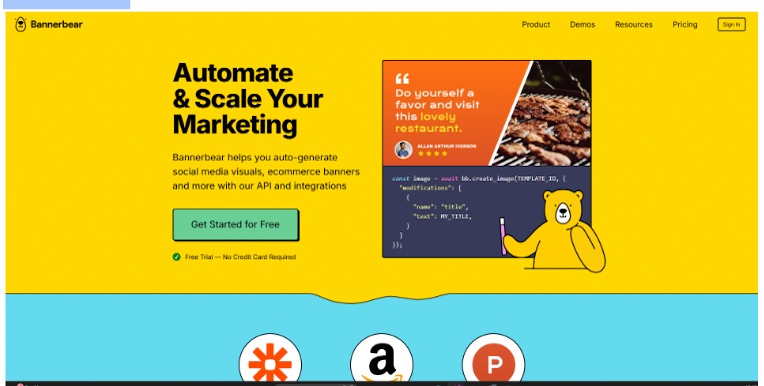
What they do:
Bannerbear helps businesses automatically generate images and visuals using APIs.
Problem they solved:
Creating marketing visuals manually takes time. Bannerbear automated this completely, especially for startups and marketing teams.
Pricing:
Starts around $49 per month
Estimated Revenue:
Over $1 million annually
Source: https://www.bannerbear.com/journey-to-1-million-arr/
4. Rezi AI
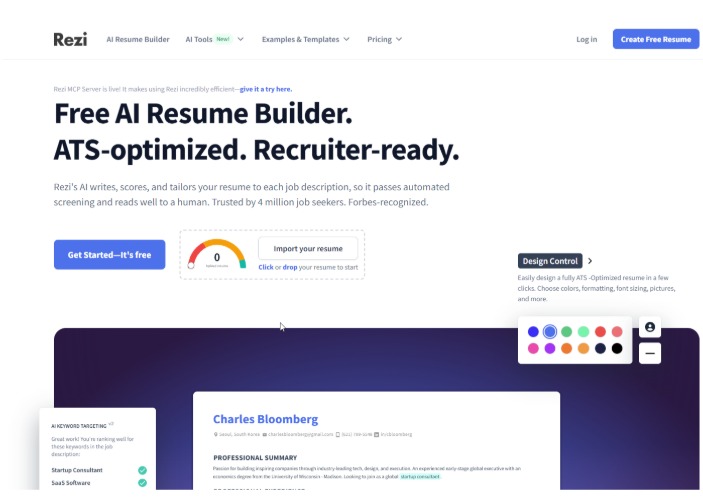
What they do:
Rezi AI helps people build professional resumes using AI. It guides users step by step and optimizes resumes to pass applicant tracking systems.
The problem they solved:
Writing a resume is stressful for most people.
They don’t know what to write, how to structure it, or how to make it stand out.
On top of that, most resumes get rejected by automated systems before a human even sees them.
Rezi solved this by:
- Giving AI-powered suggestions
- Structuring resumes properly
- Optimizing content for hiring systems
So instead of guessing, users get a resume that actually works.
Pricing:
They follow a subscription model with monthly and lifetime plans, making it accessible for job seekers at different levels.
MRR (estimated)
$289,793
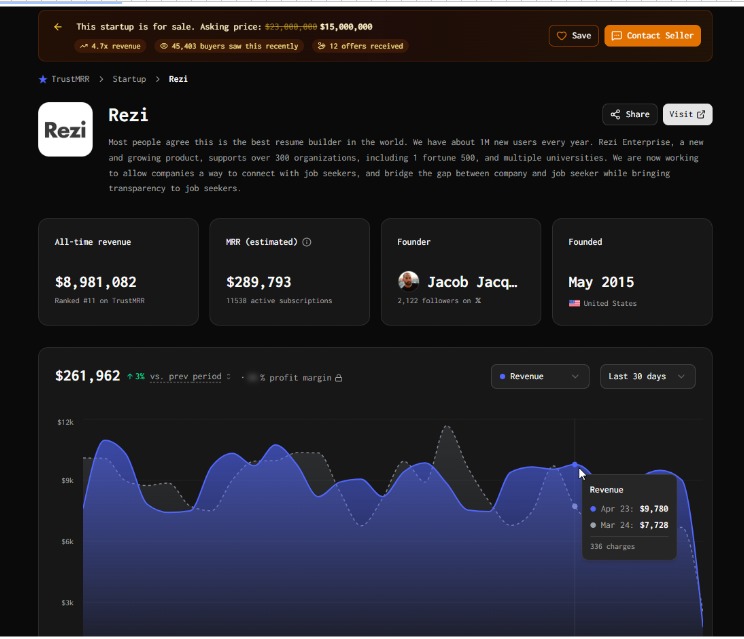
Source : https://trustmrr.com/startup/rezi
5. Gojiberry AI
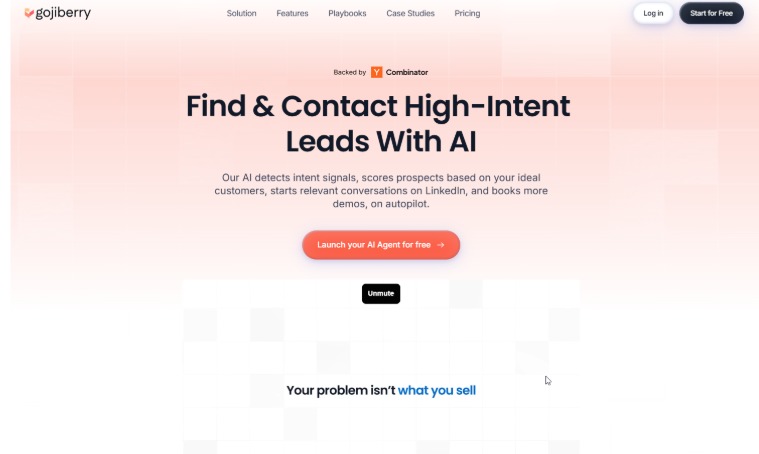
This is another example that shows how powerful simple SaaS ideas can be when executed properly.
What they actually do
Gojiberry AI helps businesses find high-intent leads and automate outreach instead of doing cold prospecting manually.
It uses AI to:
- Track buying signals (like job changes, funding, engagement, etc.)
- Identify people actively interested in your solution
- Automatically send personalized LinkedIn (and sometimes email) outreach
- Book demos and generate pipeline on autopilot
In simple terms:
It replaces random cold outreach with targeted, data-driven prospecting
The real problem they solved
Cold outreach is broken.
Businesses struggle with:
- Reaching the wrong people
- Low reply rates
- Spending hours on manual prospecting
- Scaling outbound without hiring more SDRs
Most tools give you lists of leads, but not buyers who are ready right now.
That’s the gap Gojiberry solves.
How Gojiberry AI solves it
Instead of blasting messages, Gojiberry:
- Tracks intent signals (like hiring, funding, engagement, competitor activity)
- Filters leads based on your Ideal Customer Profile (ICP)
- Uses AI to write personalized outreach messages
- Runs campaigns automatically on LinkedIn
- Continuously scores and prioritizes the best prospects. Pricing
They follow a subscription based model, offering different plans depending on usage and features.
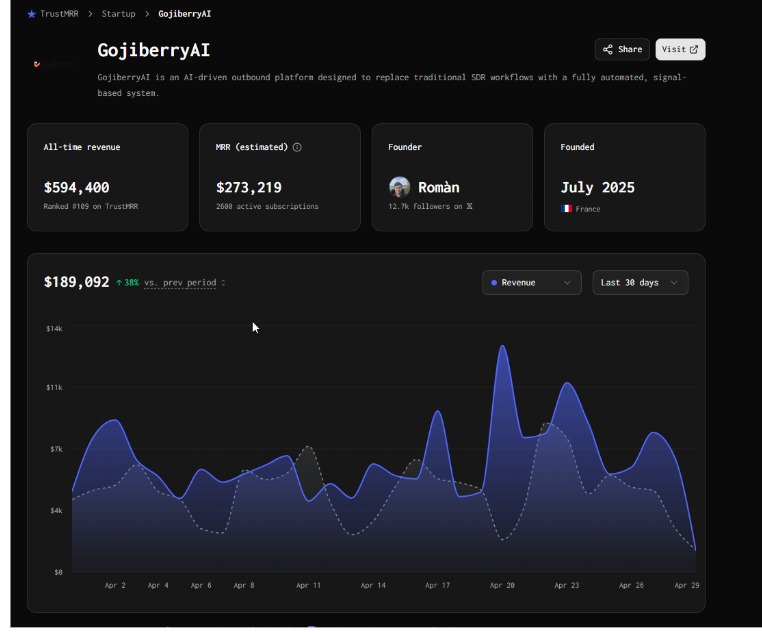
Source : https://trustmrr.com/startup/gojiberryai
6. Deal Sourcr
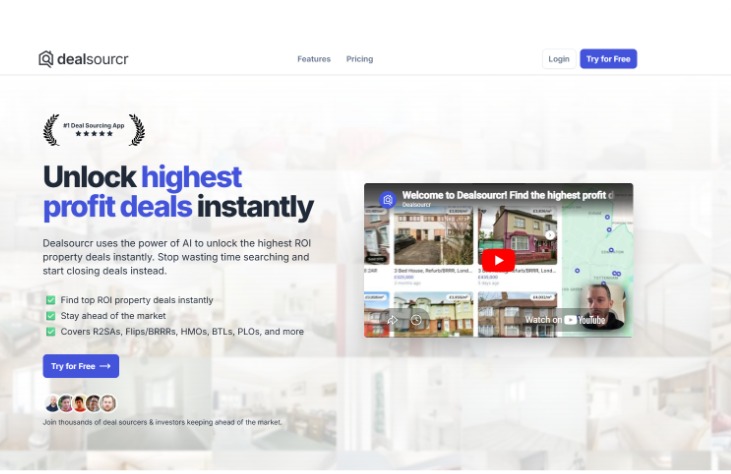
Now this one is a great example of how niche SaaS products can quietly generate serious revenue.
What they do:
Deal Sourcr is a platform that helps people find profitable business acquisition deals. It connects buyers with curated opportunities so they don’t have to search endlessly.
The problem they solved:
Finding good business deals is extremely time consuming.
People interested in buying businesses usually:
- Spend hours searching different platforms
- Struggle to find quality opportunities
- Miss out on good deals due to lack of access
Deal Sourcr simplified this by:
- Curating high quality deals
- Delivering them in a structured way
- Saving users massive amounts of time
Instead of searching everywhere, users get access to opportunities in one place.
Pricing:
They use a subscription model where users pay to access curated deal flow and insights.
Source: https://trustmrr.com/startup/dealsourcr-ltd
How These SaaS Companies Actually Make Money
Now let’s break this down in the simplest way possible.
Because once you understand this part, everything starts to click.
All the tools we just talked about, whether it is Rezi AI, Gojiberry AI, or Deal Sourcr, they are not doing anything magical.
They are just following a very simple model.
They charge people every month.
That’s it.
The Core Idea Is Recurring Revenue
Instead of selling something once, they sell access.
So instead of saying
“Pay once and own this product.”
They say:
“Pay every month to keep using this product.”
That one small shift changes everything.
Because now your income is not based on constant selling.
It is based on retention.
Let’s Make This Very Real
Imagine you build a simple SaaS tool and charge 20 dollars per month.
Now look at how this grows:
- 10 users = 200 dollars per month
- 50 users = 1000 dollars per month
- 200 users = 4000 dollars per month
- 1000 users = 20000 dollars per month
You are not building new products each time.
Same product.
Same system.
But your income keeps stacking.
That’s the beauty of SaaS.
Different Ways SaaS Companies Make Money
It is not always just one pricing plan. Most SaaS tools use smart pricing strategies.
Here are the common ones:
Subscription Plans
This is the most common model.
Users pay monthly or yearly.
Usually broken into tiers:
- Basic
- Pro
- Advanced
More features, higher price.
Freemium Model
This is what many SaaS companies use to grow fast.
They give a free version with limited features.
Once users see value, they upgrade.
This works really well because:
People try before they buy.Usage Based Pricing
Some tools charge based on how much you use them.
For example:
- Number of users
- Amount of data
- API usage
This scales naturally as customers grow.
Lifetime Deals (Early Stage)
Some SaaS products offer one-time pricing in the beginning to:
- Get early users
- Generate initial cash flow
- Validate the idea
Later, they switch to subscriptions.
Why This Model Is So Powerful
Now step back and think about this.
In most businesses, you have to keep selling again and again.
In SaaS:
- You sell once
- You keep earning every month
And if your product is good, people stay.
That means your revenue becomes predictable.
And predictable revenue is what allows you to scale.
This Is The Part Most People Miss
People think SaaS is about coding.
It is not.
It is about solving a problem that people are willing to pay for repeatedly.
That is it.
If your product saves time, makes money, or reduces effort, people will pay monthly without thinking twice.
Now Connect This Back to You
Look at all the examples again.
Rezi AI helps people get jobs
Gojiberry AI helps people create content faster
Deal Source helps people find business opportunitiesDifferent industries.
Same model.
Solve a problem → charge monthly → scale.
And This Is Where Execution Matters
Understanding this is one thing.
Building it the right way is another.
Because once people start paying, expectations go up.
Your product needs to:
- Work smoothly
- Scale properly
- Handle users without breaking
And that is exactly where most people struggle.
So Can You Actually Build Something Like This
At this point, you might be thinking
“Okay, this makes sense. But can I actually build something like this?”
And the honest answer is yes.
But not in the way most people think.
You don’t need to.
- Be a genius
- Build something massive
- Or compete with big companies
You just need to:
- Pick a real problem
- Keep the solution simple
- Build something that works
That’s how almost every successful SaaS starts.
But Here’s Where Things Usually Go Wrong
This is the part nobody really talks about.
Most people don’t fail because of ideas.
They fail because of execution.
They:
- Try to build everything at once
- Use tools that don’t scale
- Or create something that breaks when users grow
And that’s frustrating.
Because even a great idea won’t survive if the product is weak.
This Is Where Having the Right Team Changes Everything
At some point, you stop asking the following:
“How do I build this?”
And start asking:
“How do I build this the right way?”
Because if your goal is just to launch, you can do it somehow.
But if your goal is to:
- Scale
- Handle users
- Build something long-term
Then the foundation matters.
A lot.
How to Actually Find What SaaS You Should Build
This is the part where most people get stuck.
Not because SaaS is hard.
But because they keep asking the wrong question.
They ask:
“What business should I start?”Instead, you should be asking:
“What problem should I solve?”Because every successful SaaS you saw earlier started with a problem.
Not an idea.
Stop Guessing Start Observing
You don’t need to sit and brainstorm random ideas.
You need to observe what people are already struggling with.
And the best place for that right now is the internet.
More specifically, platforms where people complain openly.
Use Reddit Like a Goldmine
Reddit is one of the most underrated tools for finding SaaS ideas.
Go into subreddits related to:
- Startups
- Marketing
- Freelancing
- Real estate
- Ecommerce
- Productivity
Then just search:
- “I hate using
- “Is there a tool that
- “Why is this so hard
- “Looking for a better way to
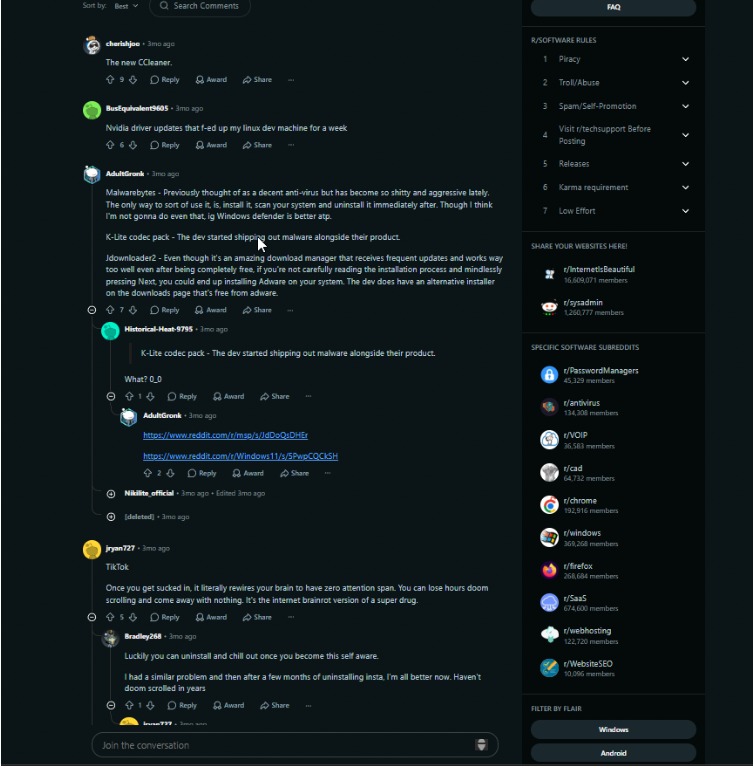
You will start seeing patterns.
People repeating the same frustrations again and again.
That’s not noise.
That’s opportunity.
Look at Reviews Not Just Posts
Another smart move most people ignore.
Go to platforms like:
- G2
- Capterra
Search for popular tools in any niche.
Now don’t read the good reviews.
Read the bad ones.
That’s where people tell you exactly what is missing.
For example:
- “This tool is too expensive”
- “This feature is missing”
- “It’s too complicated to use”
That is literally a blueprint for your SaaS.
Twitter and Communities Work the Same Way
People are constantly sharing problems on Twitter.
Founders, creators, business owners.
They talk about:
- What is not working
- What takes too much time
- What tools they hate using
You just have to pay attention.
Keep It Simple Don’t Overbuild
Here’s the biggest mistake people make after finding an idea.
They try to build everything.
Don’t.
Look at the problem and ask:
“What is the simplest way to solve this?”
That’s your product.
Not a huge platform.
Not 50 features.
Just one core solution that works really well.
Validate Before You Build
Before you even think about development, do this.
Explain your idea to real people.
Ask them:
“Would you actually pay for this?”
Even better, create a simple page and collect emails.
If people show interest, you’re on the right track.
If not, adjust.
This step alone can save you months.
Now You’re Ready for the Next Step
At this point, you:
- Understand SaaS
- Have seen real examples
- Know how they make money
- And now you know how to find your own idea
This is where things start getting real.
Because now the question is no longer
“What should I build?”
Now it becomes:
“How do I build this the right way?”
Build Your SaaS the Right Way with Growable Digital
If you are serious about turning your idea into a real SaaS business, this is where things can either go right or completely fall apart.
Growable Digital is not just another development company.
They focus on building systems that are actually meant to grow.
They have already worked on:
- SaaS platforms
- ERP systems
- Real estate software
- Automation tools
- AI driven solutions
And the difference shows in how things are built.
Instead of just delivering a product, the focus is on:
- Scalability from day one
- Clean architecture
- Performance under real users
- Long term stability
So instead of hitting limitations later, you build something that is ready to grow from the start.
Why This Actually Matters
Because building a SaaS is not just about launching.
It is about what happens after people start using it.
If your system:
- Slows down
- Breaks
- Cannot handle growth
Then everything you built starts working against you.
That is why serious founders invest in doing it right the first time.
Simple Way to Think About It
You can:
- Try to figure everything out yourself
- Patch things together
- Fix problems later
Or
You can:
- Start with the right foundation
- Build something scalable
- Focus on growth instead of fixing issues
That one decision makes a huge difference.
Book a Free Software Discover Call with us
Final Thoughts
What You Should Take Away From This
If you made it this far, you already understand something most people don’t.
The best business to start in 2026 is not about trends.
It is about building something that:
- Solves a real problem
- Generates recurring revenue
- Scales over time
SaaS checks all of those boxes.
But the real difference is not the idea.
It is how you execute it.
FAQs
What is the best business to start in 2026?
One of the best businesses to start in 2026 is a SaaS business because it allows you to generate recurring monthly revenue, scale globally, and build a long-term digital asset.
What are the best businesses to start in 2026?
The best businesses to start in 2026 include SaaS products, AI-powered tools, online service platforms, and subscription-based businesses that focus on solving real problems and generating recurring income.
What is the best online business to start in 2026?
The best online business to start in 2026 is a SaaS business because it requires low ongoing costs, can be automated, and provides consistent monthly income through subscriptions.
Why is SaaS the best business model in 2026?
The best online business to start in 2026 is a SaaS business because it requires low ongoing costs, can be automated, and provides consistent monthly income through subscriptions.
Why is SaaS the best business model in 2026?
SaaS is considered the best business model because it offers recurring revenue, scalability, global reach, and the ability to grow without constantly needing new customers.
How do I start a SaaS business in 2026?
To start a SaaS business, you need to identify a real problem, validate your idea through market research, build a simple MVP, and launch it to your target audience while improving based on feedback.
Do I need coding skills to start a SaaS business?
No, you do not need coding skills. Many founders work with development teams or agencies to build their SaaS product while they focus on idea validation, marketing, and growth.
How do SaaS businesses make money?
SaaS businesses make money through subscription models where users pay monthly or yearly to access the software, often with different pricing tiers based on features or usage.
What are the best SaaS ideas for 2026?
The best SaaS ideas focus on solving problems in areas like automation, content creation, CRM systems, real estate tools, analytics, and business productivity.
How do I find a profitable SaaS idea?
You can find profitable SaaS ideas by researching user pain points on platforms like Reddit, reading negative reviews of existing tools, and identifying problems people are willing to pay to solve.
What industries are best to start a business in 2026?
The best industries include AI, SaaS, automation, fintech, health tech, and digital services that focus on efficiency, productivity, and recurring revenue models.
How much does it cost to build a SaaS product?
The cost depends on complexity and features, but starting with a simple MVP can significantly reduce initial costs and help validate the idea before scaling.
What is better SaaS or traditional business?
SaaS is often better because it provides recurring revenue, scalability, and lower long-term operational costs compared to traditional businesses that rely on one-time sales.
Can SaaS be a small business?
Yes, SaaS can start as a small business with a simple product and grow into a large scalable company as more users subscribe over time.
What are the best small business ideas for 2026?
Some of the best small business ideas include SaaS tools, AI-powered services, niche subscription platforms, and online automation tools.
How long does it take to build a SaaS product?
A basic SaaS MVP can take a few weeks to a few months depending on complexity, while a full-scale product may take longer.