

Table of Contents
ToggleHire Android App Developer in 2026: Complete Guide for Startups & Businesses
Introduction
A few years ago, having a mobile app was considered optional for most businesses. Now in 2026, it has become one of the biggest growth drivers for startups, SaaS platforms, local businesses, e-commerce brands, healthcare companies, fintech products, and even traditional offline businesses.
People spend most of their time on mobile devices today. Whether someone wants to order food, book an appointment, manage finances, learn online, shop, or use a SaaS platform, they expect a smooth mobile experience. And if a business does not offer that experience, users simply move to competitors that do.
This is exactly why companies are actively looking to hire Android app developers who can build scalable, fast, and user-friendly applications.
Android continues to dominate the global smartphone market because of its massive user base, affordability across different device segments, and strong presence in countries like India, the United States, Brazil, Indonesia, and many other growing digital markets. For businesses, this means one thing clearly: if you want maximum reach, Android app development cannot be ignored.
Startups are investing in MVP apps to launch products faster. SaaS companies are building Android applications to improve customer retention and accessibility. Local businesses are creating mobile apps to increase direct orders and customer engagement. Enterprises are digitizing internal operations through custom Android applications.
But here is where many businesses make mistakes.
Building an Android app is not just about writing code anymore. The quality of your development team directly affects your app performance, user experience, scalability, security, and even future business growth. A poorly built application can lead to slow performance, crashes, security issues, and expensive redevelopment later.
That is why choosing the right Android app development company or dedicated development team has become one of the most important decisions for modern businesses.
Many successful mobile apps today are not built by random freelancers working alone. They are usually developed with experienced technology partners that understand product strategy, UI/UX, scalability, backend architecture, and long-term support.
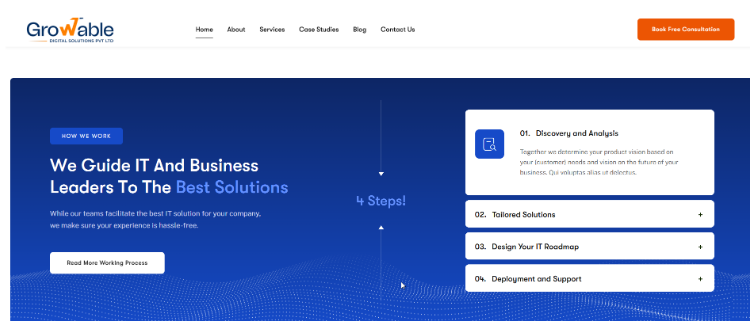
Companies like Growable Digital are becoming preferred development partners for startups and businesses that want serious long-term growth instead of quick temporary solutions.
In this guide, we will explain everything businesses need to know before they hire Android app developers in 2026, including development costs, hiring models, mistakes to avoid, and how to choose the right mobile app development team for your project.
Why Businesses Are Investing in Android Apps in 2026
In 2026, businesses are no longer asking whether they need a mobile app. The real question now is how fast they can launch one before competitors capture the market.
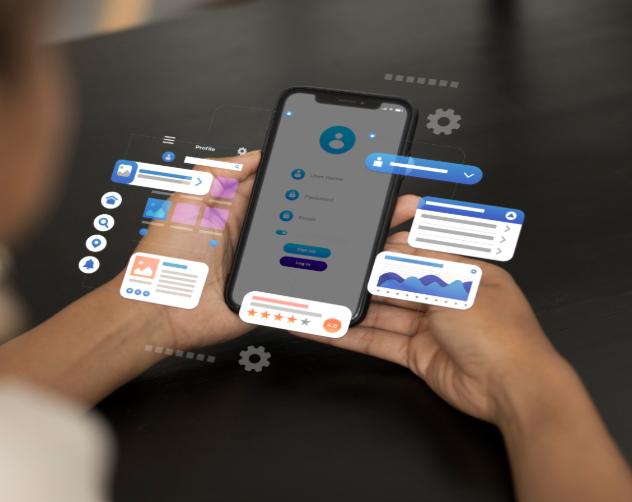
Almost every industry today is becoming mobile-first. From SaaS platforms and e-commerce brands to healthcare startups, fintech companies, restaurants, logistics businesses, and local service providers, everyone is trying to build stronger mobile experiences for users.
And when businesses decide to invest in mobile applications, Android usually becomes the first priority.
The reason is simple Android has the largest user base globally, gives businesses access to massive markets, and allows companies to scale faster across different customer segments.
At the same time, AI-powered mobile experiences, subscription-based apps, and startup ecosystems are growing rapidly. Businesses now understand that mobile apps are no longer just tools for engagement. They are becoming complete revenue channels.
Android Has the Largest User Base
Android continues to dominate the global mobile market in 2026. According to recent global market share reports, Android powers more than two-thirds of smartphones worldwide, making it the most widely used mobile operating system globally.
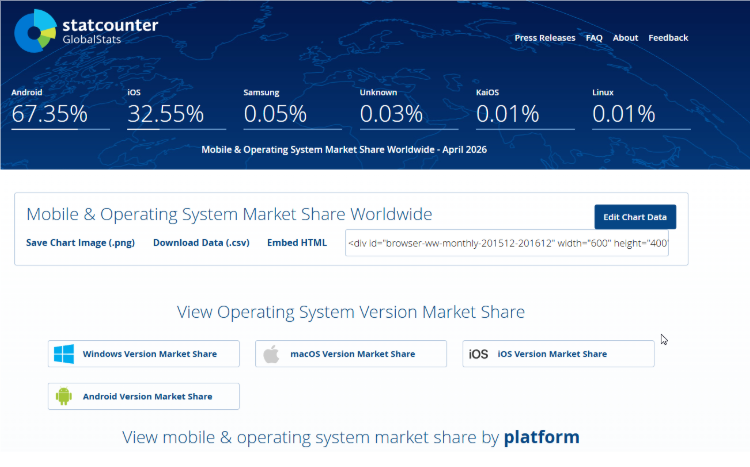
Source: https://gs.statcounter.com/os-market-share/mobile-/worldwide/2026?
This is one of the biggest reasons businesses prefer custom Android app development.
When companies build Android applications, they can reach users across multiple countries, price segments, and device categories. Android is especially dominant in growing digital markets like India, Southeast Asia, South America, Africa, and many parts of Europe.
For startups, this creates massive opportunities.
Instead of limiting their product to premium device users only, businesses can target millions of Android users across different demographics. Whether it is a SaaS platform, e-commerce app, food delivery platform, fintech product, or AI tool, Android offers scale that businesses simply cannot ignore.
That is why many companies looking to hire Android app developers today focus heavily on scalability, performance optimization, and long-term app growth rather than just launching basic applications.
You can check the latest Android market share data here:
Mobile Usage Keeps Growing
People are spending more time on smartphones than ever before.
Shopping, banking, learning, entertainment, healthcare consultations, ordering food, booking services, managing businesses almost everything now happens through mobile apps.
In countries like India especially, mobile-first internet usage has exploded because of affordable smartphones, cheaper internet access, and growing digital adoption. Reports show India’s digital economy is expected to cross $1 trillion by 2030, largely driven by mobile users and digital platforms.
This shift has completely changed how businesses operate.
A few years ago, websites were enough for many companies. Today, customers expect faster mobile experiences, instant notifications, personalized recommendations, smooth payment systems, and app-based interactions.
If a business does not provide a good mobile experience, users quickly move to competitors that do.
That is exactly why startups and businesses are actively investing in:
- Custom Android app development
- Dedicated mobile app teams
- AI-integrated mobile applications
- Subscription-based mobile products
- Ecommerce mobile platforms
- SaaS mobile applications
Even traditional businesses are now becoming app-first brands.
Businesses Need Custom Mobile Experiences
One thing many businesses are realizing in 2026 is that template apps and cheap freelance development usually do not work long-term.
Users expect apps to feel fast, smooth, personalized, and easy to use. If an app crashes, feels outdated, loads slowly, or lacks proper user experience, people uninstall it immediately.
This is where custom Android app development becomes extremely important.
Modern businesses do not just want “an app.” They want:
- A scalable product
- Better user retention
- Faster performance
- AI-powered features
- Subscription systems
- Secure backend architecture
- Custom dashboards
- Real-time analytics
- Seamless user experience
And honestly, this is why experienced development teams matter a lot now.
Many businesses initially hire random freelancers because the pricing looks cheaper. But later they struggle with bugs, poor app architecture, delayed updates, security issues, and scaling problems. Eventually, they end up rebuilding the app from scratch with a proper Android app development company.
You can already see how fast the app economy is growing. Reports in 2026 show subscription app launches have increased nearly 7x since 2022 because AI tools and faster development systems are making app creation easier.
At the same time, competition is becoming harder.
That means businesses now need better UI/UX, better app performance, stronger retention strategies, and long-term product thinking if they actually want growth.
This is exactly why startups and businesses increasingly prefer working with experienced mobile app development partners like Growable Digital instead of depending entirely on low-cost freelancers with limited scalability experience.
The businesses winning in 2026 are usually the ones treating mobile apps like real digital products, not side projects.
Why Hiring the Right Android App Developer Matters
A lot of businesses think hiring an Android developer is simple.
Find someone cheap, build the app, and launch it.
But honestly, that is where most businesses start facing problems later.
Because a mobile app is not just about screens and features anymore. Your app performance directly affects customer trust, retention, revenue, and even brand reputation.
Today users expect everything to work instantly.
If an app feels slow for even a few seconds, people leave. Studies show around 53% of users abandon mobile experiences if loading takes too long.
That is why experienced Android app developers focus heavily on performance optimization from day one.
Things like:
- Faster loading
- Smooth navigation
- Stable backend systems
- Battery optimization
- Device compatibility
- Secure APIs
These things matter much more than people think.
Good User Experience Keeps People Using Your App
Most users decide within minutes whether they like an app or not.
If onboarding feels confusing or the app looks outdated, uninstall rates go up very fast.
This is exactly why businesses now invest heavily into proper UI/UX and custom Android app development instead of using basic template apps.
A good Android development team thinks beyond coding.
They think:
- How users move inside the app
- Where users may get confused
- How to improve retention
- How to reduce friction
Small improvements in user experience can increase engagement massively over time.
Security Is a Huge Deal in 2026
Mobile apps now handle payments, customer data, subscriptions, locations, chats, and business operations.
One security issue can damage customer trust completely.
And users today are much more aware of privacy than before.
This is why experienced Android app development companies focus on:
- Secure authentication
- Encrypted databases
- Protected APIs
- Cloud security
- Regular maintenance updates
Especially for fintech, SaaS, e-commerce, and healthcare apps, security is not optional anymore.
Scalability Is Where Cheap Development Usually Fails
Many apps work perfectly with 100 users.
Problems start when suddenly 10,000 people start using the app.
Without proper backend architecture:
- Servers crash
- Apps slow down
- Notifications fail
- Payments break
- User experience becomes unstable
This happens a lot with poorly developed apps.
Good Android developers build systems that can actually grow with the business.
That is why many startups now prefer working with experienced development partners like Growable Digital instead of depending entirely on random freelancers who only focus on quick delivery.
Because rebuilding a broken app later usually costs far more than building it properly from the beginning.
Maintenance Never Stops
A lot of people think app development ends after launch.
In reality, launch is just the beginning.
Android devices keep changing. New OS updates arrive every year. Security patches, bug fixes, API updates, feature improvements all of this needs ongoing maintenance.
Without proper support, apps slowly become outdated.
And outdated apps lose users very quickly.
Freelancer vs Android App Development Company
When businesses decide to hire Android app developers, one big question always comes up.
Should you hire a freelancer or work with an Android app development company?
Honestly, both options can work. But it completely depends on your business goals, budget, and how serious you are about scaling the app long-term.
Hiring Freelancers
A lot of startups initially choose freelancers because the upfront cost looks lower.
And yes, for small tasks or very basic MVPs, freelancers can sometimes help move faster.
Pros
- Lower initial development cost
- Flexible hiring
- Good for small temporary tasks
- Faster for very simple projects
But this is where many businesses start facing problems later.
Most freelance developers work alone. That means one person is usually handling development, testing, backend, app optimization, and sometimes even UI.
As the app grows, things become difficult very quickly.
Cons
- Communication delays
- Missed deadlines
- Limited scalability
- No structured workflow
- Weak testing process
- Lack of long-term maintenance support
And honestly, this happens more often than people think.
A report by the PMI (Project Management Institute) showed poor communication is one of the biggest reasons projects fail globally.
Source:https://www.pmi.org/learning/library/identify-factors-cause-project-failure-2442?
This becomes a serious issue when businesses rely completely on one freelancer for an important product.
If the developer disappears, becomes unavailable, or delivers unstable code, the entire business suffers.
Hiring an Android App Development Company
This is why many startups and businesses now prefer working with dedicated Android app development agencies.
Instead of depending on one person, businesses get access to an entire team.
Usually this includes:
- Android developers
- UI/UX designers
- Backend developers
- QA testers
- Project managers
- Support teams
That creates a much smoother development process.
Pros
- Dedicated development team
- Better UI/UX quality
- Proper backend systems
- Structured testing process
- Faster scalability
- Long-term maintenance support
- Professional workflows
And this matters a lot in 2026 because users expect stable, polished mobile experiences.
According to IBM, poor user experience and system performance directly affect customer retention and business growth in digital products.
Source: https://www.ibm.com/topics/user-experience
This is exactly why businesses building serious products usually choose experienced development partners instead of only looking for the cheapest option.
Companies like Growable Digital help startups and businesses build scalable Android applications with proper product strategy, backend architecture, UI/UX planning, testing, and long-term support instead of just delivering basic app code.
Because in reality, successful apps are rarely built with short-term thinking.
What Skills a Good Android App Developer Should Have
A lot of people can build an Android app.
But building a stable, scalable, and high-performing app is a completely different thing.
That is why businesses should look beyond just “coding skills” when they hire Android app developers.
A good developer should understand both technology and product thinking.
Kotlin & Java
These are still the core languages behind Android development.
Kotlin has become the preferred choice for modern Android apps because it is faster, cleaner, and officially supported by Google.
In fact, Google announced Kotlin as its preferred Android development language years ago, and most serious Android apps today are built using Kotlin.
Source: https://developer.android.com/kotlin
Good developers usually know both Kotlin and Java because many businesses still maintain older Java-based applications.
Android Studio
This is the main development environment for Android apps.
An experienced Android developer should know how to properly use Android Studio for:
- Debugging
- Performance optimization
- Testing
- App deployment
- Emulator testing
- Device compatibility
This directly affects app quality and development systems.
API Integrations
Modern apps rarely work alone.
Almost every app today connects with third-party systems like:
- Payment gateways
- CRMs
- AI tools
- Maps
- Analytics
- Chat systems
- SaaS platforms
That is why API integration experience is extremely important.
Poor API architecture often becomes one of the biggest reasons apps become slow or unstable later.
Firebase Knowledge
A lot of startups use Firebase because it helps speed up development.
Good Android developers should understand:
- Firebase Authentication
- Push notifications
- Real-time databases
- Crash analytics
- Cloud messaging
- User analytics
Especially for startups building MVPs, Firebase can reduce development time significantly.
UI/UX Understanding
This is where average developers and good developers become very different.
A developer should not only build screens.
They should understand how users actually interact with the app.
Things like:
- Button placement
- Navigation flow
- User onboarding
- App responsiveness
- Smooth animations
All these things improve retention.
And honestly, users today judge apps very quickly.
If the app feels outdated or confusing, they leave immediately.
Performance Optimization
Google research has shown that mobile users quickly abandon slow experiences.
Source: https://www.thinkwithgoogle.com/intl/en-apac/marketing-strategies/app-and-mobile/mobile-need-for-speed/
Good Android developers focus heavily on:
- Faster loading speed
- Memory optimization
- Reduced crashes
- Smooth scrolling
- Battery efficiency
Because app performance directly affects reviews, retention, and revenue.
Security Best Practices
Security is becoming a massive priority in 2026.
Apps now handle:
- Payments
- User data
- Business operations
- Subscriptions
- Personal information
A good Android developer should understand:
- Secure authentication
- Data encryption
- API protection
- Secure cloud storage
- Role-based access systems
Weak security can damage user trust very fast.
App Store Deployment
Launching an app is not just uploading files to Google Play Store.
There are many technical steps involved:
- App signing
- Play Store optimization
- Policy compliance
- Version management
- Release testing
Experienced Android app development companies usually handle this entire process smoothly.
That is one reason many startups prefer working with companies like Growable Digital instead of managing everything alone.
Questions to Ask Before Hiring Android App Developers
A lot of businesses hire developers too quickly.
Then later they realize the team cannot handle scaling, maintenance, or product growth properly.
Asking the right questions early can save a huge amount of time and money later.
Have You Built Similar Apps Before?
This should always be one of the first questions.
If a developer has already worked on ecommerce apps, SaaS products, AI tools, fintech platforms, or subscription apps similar to yours, development usually becomes much smoother.
Experience matters a lot.
Because every industry has different challenges.
What Technologies Do You Use?
Good developers should clearly explain their tech stack.
For example:
- Kotlin or Java
- Firebase
- Node.js backend
- AWS or Google Cloud
- REST APIs
- AI integrations
If someone cannot clearly explain their development approach, that is usually a red flag.
Will the App Be Scalable?
Many businesses forget to ask this.
Your app may start small today.
But what happens when traffic grows?
Ask:
- Can the backend handle growth?
- Can features be added later?
- Will performance stay stable?
- Can AI systems integrate later?
Scalability should be planned from the beginning.
How Do You Handle Maintenance?
Apps need continuous updates.
Bug fixes, Android version updates, security patches, performance improvements all of this matters long term.
Without proper maintenance support, apps become outdated very quickly.
Do You Provide UI/UX Design?
A lot of developers only focus on coding.
But modern apps need strong UI/UX to compete.
Good development teams usually include:
- UI designers
- UX specialists
- Product strategists
- QA testers
This creates a much better final product.
What Is the Development Timeline?
A professional team should always provide:
- Proper milestones
- Delivery timelines
- Sprint planning
- Feature breakdowns
If timelines sound unrealistic, businesses should be careful.
Because rushed app development usually creates bigger problems later.
Industries Investing Heavily in Android Apps
Almost every industry is investing in Android apps right now.
Not because it is a trend.
Because customers expect everything on mobile now.
People want faster access, smoother experiences, instant updates, and convenience directly from their phones. Businesses that understand this are growing much faster than companies still depending only on websites or offline systems.
And since Android has the largest mobile user base globally, most businesses start there first.
Healthcare
Healthcare apps have grown massively in the last few years.
People now book appointments, consult doctors, track health reports, order medicines, and manage fitness directly through mobile apps.
Hospitals and clinics are also building custom Android apps for:
- Patient management
- Online consultations
- Appointment systems
- Health tracking
- Internal staff operations
The global digital health market is expected to keep growing rapidly because mobile healthcare adoption is increasing worldwide.
Source: https://www.grandviewresearch.com/industry-analysis/digital-health-market
Fintech
Fintech is one of the biggest industries investing in Android development.
UPI payments, mobile banking, investing apps, lending platforms, crypto apps, insurance platforms everything is becoming mobile-first.
And honestly, users expect banking apps to work perfectly.
That is why fintech companies invest heavily into:
- Security
- Scalability
- Performance
- Real-time systems
Even small delays in fintech apps can affect user trust immediately.
E-commerce
E-commerce businesses are pushing heavily toward mobile apps because app users usually convert better than website visitors.
Apps help businesses improve:
- Customer retention
- Push notification marketing
- Repeat purchases
- User experience
- Faster checkout systems
According to Statista, mobile commerce continues dominating global ecommerce sales every year.
Source: https://www.statista.com/topics/871/online-shopping/
That is why most ecommerce brands now prioritize mobile app development very early.
Education
EdTech platforms are growing very fast.
Students now learn directly from mobile apps through:
- Live classes
- Recorded courses
- AI learning systems
- Practice tests
- Community platforms
Android apps are especially important in countries where mobile devices are the primary learning tool.
A lot of startups entering education today are mobile-first from day one.
Food Delivery
Food delivery apps completely changed customer behavior.
People now expect:
- Real-time tracking
- Faster ordering
- Easy payments
- Personalized offers
- Subscription models
This industry depends heavily on app performance because even small delays affect customer experience directly.
That is why food delivery businesses invest heavily into stable backend systems and scalable Android applications.
Logistics
Logistics companies are also becoming app-driven.
Today Android apps are used for:
- Delivery tracking
- Fleet management
- Route optimization
- Driver communication
- Inventory systems
- Warehouse management
Mobile systems help logistics businesses reduce manual operations and improve efficiency massively.
SaaS Platforms
A lot of SaaS companies initially start with web platforms.
But later they realize users also want mobile accessibility.
That is why many SaaS startups now build Android apps for:
- Notifications
- Dashboard access
- Team collaboration
- CRM systems
- Analytics
- Productivity tools
And honestly, mobile access improves customer retention a lot for SaaS businesses.
This is why many growing SaaS brands work with experienced mobile development partners like Growable Digital to build scalable Android applications alongside their main platforms.
Local Service Businesses
Even local businesses are investing heavily into Android apps now.
Salons, gyms, repair services, restaurants, clinics, real estate agencies, and local stores are all trying to improve customer engagement through mobile apps.
Simple features like:
- Online booking
- Push notifications
- Loyalty systems
- Direct ordering
- Customer support
can significantly increase repeat customers.
And because Android dominates in local markets globally, businesses see much better reach through Android applications.
Why Long-Term Support Matters After Launch
One mistake many businesses make is thinking the project is finished once the app goes live.
But honestly, app development does not stop after launch.
Launch is actually the beginning.
Because once real users start using the app, new problems, improvements, and scaling needs start appearing very quickly.
Bug Fixes Are Continuous
No app stays perfect forever.
Once users start using different devices, Android versions, screen sizes, and network conditions, bugs naturally appear.
Some may be small.
Some can directly affect payments, logins, or app performance.
That is why long-term maintenance support matters a lot after launch.
Apps that receive regular updates usually keep better ratings and stronger user retention.
Android Updates Keep Changing Things
Android releases regular OS updates every year.
And if an app is not updated properly, compatibility issues start happening.
Features may break.
Notifications may stop working.
Performance can drop.
This is why experienced Android app developers continuously monitor compatibility and release updates when needed.
Without ongoing support, apps slowly become outdated.
Scaling Infrastructure Becomes Important As Users Grow
A lot of apps work fine in the beginning.
Problems usually start when traffic increases.
More users means:
- More server requests
- More database load
- More real-time activity
- More storage usage
Without proper scaling support, apps become slow or unstable very fast.
This is one reason businesses now prefer long-term development partners instead of short-term freelancers.
Because scaling requires continuous technical improvements.
Performance Monitoring Helps Retain Users
User expectations are extremely high in 2026.
If an app starts lagging, crashing, or draining battery, users immediately notice it.
Good development teams constantly monitor:
- Crash reports
- Loading speed
- API response time
- Device performance
- User behavior
This helps businesses improve the app continuously instead of waiting for negative reviews.
According to Google research, users quickly abandon poor mobile experiences if performance drops.
Source: https://www.thinkwithgoogle.com/intl/en-apac/marketing-strategies/app-and-mobile/mobile-need-for-speed/
Long-Term Support Saves Money Later
A lot of businesses try to save money during development.
But ignoring maintenance usually creates bigger expenses later.
Because rebuilding a broken or outdated app costs far more than maintaining it properly from the beginning.
That is why experienced development companies like Growable Digital focus not only on launching Android apps but also on long-term scalability, maintenance, updates, and performance optimization as the business grows.
If you liked this blog, Check out my Other Blog on: How to Build a SaaS Product from Scratch (2026 Guide) – Real Steps & Lessons Learned
Final Thoughts
The Android app market is growing faster every year.
More businesses are becoming mobile-first because that is where users spend most of their time now. Whether it is e-commerce, SaaS, fintech, healthcare, education, or local businesses, mobile apps are becoming one of the biggest drivers of growth.
And honestly, users expect smooth mobile experiences today.
They want fast apps, simple navigation, secure payments, real-time updates, and reliable performance. Businesses that fail to deliver this usually struggle to retain users long term.
That is why hiring the right Android app developers matters so much.
A strong development team does much more than just write code. They help businesses build scalable architecture, better user experience, stable backend systems, and long-term product strategies that actually support growth.
Because in reality, rebuilding a poorly developed app later usually costs far more than building it properly from the beginning.
This is exactly why many startups and growing businesses now prefer experienced development partners like Growable Digital that focus on long-term scalability, product quality, UI/UX, maintenance, and performance optimization instead of only quick app delivery.
The businesses winning in 2026 are not just launching apps.
They are building scalable digital products designed for long-term growth.
FAQs
How much does it cost to hire an Android app developer?
The cost depends on app complexity, features, backend systems, UI/UX requirements, and developer experience. Simple apps may cost a few thousand dollars, while scalable SaaS or enterprise applications can cost significantly more.
Should startups hire freelancers or app development companies?
Freelancers can work for small projects or basic MVPs. But startups planning long-term growth usually prefer Android app development companies because they provide dedicated teams, better scalability, structured workflows, testing, and ongoing support.
How long does Android app development take?
Basic apps may take a few weeks, while advanced apps with custom features, backend systems, APIs, and AI integrations can take several months depending on complexity.
Why is custom Android app development important?
Custom Android app development helps businesses create unique user experiences, better performance, scalability, stronger security, and features tailored specifically to their business goals.
What technologies are used in Android app development?
Modern Android apps commonly use:
- Kotlin
- Java
- Firebase
- REST APIs
- Node.js
- AWS
- Google Cloud
- AI integrations
- Real-time databases
The tech stack depends on project requirements.
Can Android apps scale for large businesses?
Yes. With proper backend architecture and infrastructure planning, Android apps can scale for millions of users, real-time operations, and enterprise-level systems.
What industries benefit most from Android apps?
Industries investing heavily into Android apps include:
- Healthcare
- Fintech
- Ecommerce
- Education
- Logistics
- SaaS platforms
- Food delivery
- Local service businesses
Do Android apps require maintenance after launch?
Yes. Apps need regular updates, bug fixes, security patches, Android OS compatibility updates, performance monitoring, and feature improvements after launch.
How do I choose the right Android app development company?
Businesses should evaluate:
- Previous app portfolio
- Technical expertise
- UI/UX capabilities
- Communication process
- Maintenance support
- Scalability experience
- Client reviews
- Development workflow
Choosing the right team early can save significant time and money later.
Why do startups outsource Android app development?
Startups often outsource Android app development because it helps them access experienced developers, reduce hiring costs, speed up product launches, and focus more on business growth instead of building internal technical teams immediately.
Warning: Trying to access array offset on false in /home/u971387193/domains/growabledigital.com/public_html/wp-content/themes/safebyte/inc/classes/class-blog.php on line 220