

Table of Contents
ToggleHow to Build an MVP for a Startup in 2026
Most startup founders don’t fail because they lacked ambition.
They fail because they built too much before learning what users actually wanted.
That’s still one of the biggest startup problems in 2026.
A founder gets excited about an idea. The roadmap grows. Features multiply. Development drags on for months. Money disappears. Then the product launches and users barely care.
It happens constantly.
That’s exactly why learning how to build an MVP properly matters so much today.
An MVP, short for Minimum Viable Product, helps startups validate ideas quickly, reduce risk, save development costs, and launch products faster without overbuilding from day one.
And honestly, modern startups don’t really have the luxury of wasting 18 months building giant products before validation anymore.
The SaaS and AI markets move too fast for that now.
According to startup insights frequently discussed by organizations like Y Combinator and covered by publications like TechCrunch and Forbes, the startups that win today are often the ones that learn fastest, not necessarily the ones that build the biggest products first.
This guide breaks down exactly how startup founders can:
- validate ideas
- plan an MVP
- choose features
- build lean
- avoid common mistakes
- launch faster
- scale intelligently
without wasting huge amounts of time or money.
Whether you’re building:
- a SaaS platform
- AI startup
- marketplace
- web app
- mobile application
- automation product
This guide will help you approach MVP development strategically instead of emotionally.
What Is an MVP in Startup Development?
MVP stands for Minimum Viable Product. But that definition gets misunderstood constantly.
A real MVP is not
- a buggy unfinished app
- a low-quality product
- a random prototype
- “the cheapest thing possible”
A proper MVP is the smallest functional version of a product that solves a real problem for real users.
That’s it. The goal is learning quickly before scaling aggressively.
An MVP helps founders validate the following:
- user demand
- retention
- usability
- pricing
- workflows
- business viability
before investing heavily into full product development.
This approach comes directly from Lean Startup principles popularized by Eric Ries and startup ecosystems like Y Combinator.
Why Startups Should Build an MVP Before Full Product Development
A lot of founders still make the mistake of trying to launch fully-featured software products immediately.
Usually because they think:
- more features increase value
- investors expect polished products
- competitors are moving faster
- launching small looks weak
But the opposite is often true.
Most successful startups started much smaller than people realize.
MVPs Reduce Risk
Building software is expensive.
Building the wrong software is even more expensive.
An MVP reduces risk because startups validate demand before scaling development.
That’s incredibly important.
Especially in competitive SaaS markets.
MVPs Save Development Costs
Every feature costs:
- time
- engineering effort
- testing
- maintenance
- infrastructure
- future updates
Founders who skip MVP validation often waste huge budgets building features users never actually wanted.
That’s why startup-focused MVP development companies prioritize lean execution heavily.
MVPs Help Startups Launch Faster
Modern startup markets move quickly.
Especially:
- AI SaaS
- automation tools
- marketplaces
- productivity apps
- creator tools
If startups spend years building before launching, competitors often dominate the category first.
MVP development helps founders:
- launch earlier
- gather feedback faster
- improve products quicker
- iterate continuously
That speed matters massively in 2026.
Step 1: Validate the Startup Idea Before Building Anything
This is where most startups should spend more time.
Not coding.
Validating.
Because coding the wrong idea faster still produces the wrong outcome.
Talk to Real Potential Users
Customer interviews remain one of the most powerful startup validation tools.
Founders should ask:
- How are users solving this today?
- What frustrates them?
- What tools are they paying for?
- What workflows waste time?
- Would they switch solutions?
The goal is understanding painful problems.
Not pitching your idea immediately.
Use Landing Pages to Measure Demand
Before building a full SaaS product, many startups now test:
- messaging
- pricing
- positioning
- signup intent
- waitlists
Simple landing pages reveal whether users actually care about the value proposition.
This saves enormous amounts of development waste.
Research Competitors Deeply
Competitors are not necessarily bad.
They often validate demand.
The important question becomes:
How can your startup solve the problem better?
Strong startup research includes analyzing:
- reviews
- onboarding
- pricing
- feature gaps
- user complaints
- retention issues
Communities like Reddit and Indie Hackers are especially valuable because users openly discuss frustrations there.
Step 2: Define the Core Problem Your MVP Solves
One of the biggest startup mistakes is trying to solve too many problems at once.
Strong MVPs focus narrowly.
That’s critical.
Your MVP should ideally solve:
- one painful problem
- for one clear audience
- with one strong outcome
The simpler the initial product focus, the easier it becomes to:
- onboard users
- improve retention
- gather feedback
- scale intelligently
Step 3: Prioritize Features Ruthlessly
This is where many founders lose discipline.
Every feature starts sounding important.
But MVP development is largely about deciding what NOT to build initially.
A useful exercise:
Ask yourself:
“If we removed this feature, would the core product still work?”
If the answer is yes, it probably doesn’t belong in version one.
Focus on Core Features First
Strong MVPs usually prioritize:
- onboarding
- core workflows
- user authentication
- basic dashboards
- essential functionality
Not:
- advanced automation
- enterprise permissions
- dozens of integrations
- unnecessary AI layers
- secondary workflows
The best MVPs feel focused, not overloaded.
Step 4: Choose the Right MVP Development Approach
Founders have several options when building an MVP.
Each comes with tradeoffs.
Freelancers
Freelancers can work well for:
- prototypes
- very lean budgets
- small product builds
But founders often underestimate the following:
- management overhead
- inconsistent quality
- scalability limitations
- communication challenges
In-House Teams
Internal teams offer long-term control.
But hiring internally early-stage can become the following:
- expensive
- slow
- operationally heavy
Especially for startups still validating product-market fit.
MVP Development Companies
A startup-focused MVP development company often provides:
- product strategy
- design
- engineering
- scalability planning
- QA
- launch support
This is why many startups choose agencies early:
they move faster with less operational complexity.
Step 5: Choose the Right Tech Stack
Founders often obsess over technology stacks too early.
Honestly, product-market fit matters far more initially.
Still, choosing scalable technologies matters.
Popular MVP Tech Stacks in 2026
Modern startup MVPs commonly use:
- React
- Next.js
- Node.js
- Python
- PostgreSQL
- Supabase
- Firebase
- AWS
- Vercel
AI startups increasingly rely on Python because of machine learning and LLM integrations.
Frontend-focused SaaS products often prefer React ecosystems because of speed and scalability.
Avoid Overengineering Early
This is important.
A startup MVP does NOT need:
- enterprise infrastructure
- ultra-complex microservices
- massive scalability layers
- unnecessary architecture complexity
The goal is validation first.
Not building infrastructure for hypothetical millions of users on day one.
Step 6: Design the MVP User Experience Carefully
Bad UX destroys retention quickly.
Users expect software to feel intuitive immediately now.
Especially with modern AI products increasing usability expectations dramatically.
Strong MVP UX Focuses On
- simplicity
- onboarding clarity
- reduced friction
- fast workflows
- clear navigation
The easiest products to use usually win early adoption.
Not necessarily the products with the most features.
Step 7: Build the MVP Lean and Fast
This phase should focus heavily on execution speed without sacrificing core product quality.
Modern startups win through iteration speed.
Not perfection.
What the MVP Development Phase Usually Includes
- frontend development
- backend systems
- authentication
- APIs
- databases
- integrations
- payment systems
- testing
The best MVP development process focuses on building only what users need initially.
That discipline is incredibly valuable.
Step 8: Test Before Launch
A lot of founders rush this stage.
Bad idea.
Even lean MVPs need:
- reliability
- usability
- stable workflows
- reasonable performance
Users forgive missing features.
They rarely forgive broken products.
Key MVP Testing Areas
- onboarding
- responsiveness
- performance
- authentication
- mobile compatibility
- payment systems
- workflows
QA matters more than many founders realize.
Step 9: Launch Fast and Learn Faster
The launch is not the finish line.
It’s the beginning of real learning.
Modern startups often launch through:
- beta communities
- waitlists
- invite-only access
- Product Hunt
- founder audiences
- niche communities
The goal is gathering:
- user feedback
- retention data
- behavior insights
- onboarding friction points
before scaling aggressively.
Step 10: Improve the Product Based on Real Data
This is where many great startups separate themselves.
The best founders continuously iterate based on:
- user behavior
- analytics
- feedback
- churn data
- activation metrics
Not assumptions.
Metrics Founders Should Track
- retention
- churn
- onboarding completion
- active users
- conversion rates
- revenue
- feature usage
Without data, startups are guessing.
And guessing gets expensive.
Common MVP Mistakes Founders Should Avoid
Most startup mistakes are predictable.
Which means they’re avoidable.
Building Too Many Features
This is the biggest one.
More features usually increase:
- complexity
- confusion
- development time
- bugs
- costs
The strongest MVPs stay focused.
Skipping Validation
Many startups build products based purely on assumptions.
Without:
- interviews
- waitlists
- testing
- demand validation
That’s risky.
Hiring Cheap Developers Only Based on Price
Cheap development often creates:
- technical debt
- scalability issues
- rebuilding costs
- poor UX
- unstable products
Founders should optimize for long-term value, not just lowest price.
Ignoring Scalability Entirely
An MVP should stay lean.
But it still needs thoughtful architecture underneath.
Not enterprise overengineering.
Just smart foundational decisions.
No-Code vs Custom MVP Development
No-code tools exploded because they promise fast startup launches without engineering teams.
And honestly, they’re useful for:
- prototypes
- internal tools
- basic validation
- workflow testing
But many startups eventually hit serious limitations.
Common No-Code Problems
- scalability issues
- limited customization
- vendor dependency
- integration limitations
- performance bottlenecks
- technical migration headaches
That’s why many serious SaaS founders eventually move toward custom MVP development.
Because long-term product ownership matters.
How AI Is Changing MVP Development in 2026
AI is fundamentally changing startup development.
Modern startups now use AI for the following:
- coding assistance
- research
- onboarding
- automation
- support systems
- workflows
- product features
AI tools are helping startups move dramatically faster.
But there’s something important founders should understand:
AI accelerates execution.
It does not replace product thinking.
The best startups still require:
- strategy
- validation
- prioritization
- UX thinking
- scalability planning
That human layer still matters massively.
Why Many Startups Choose Growable Digital for MVP Development
Building a startup product is stressful.
Founders are balancing:
- validation
- timelines
- budgets
- investors
- product decisions
- growth pressure
That’s why choosing the right technical partner matters so much.
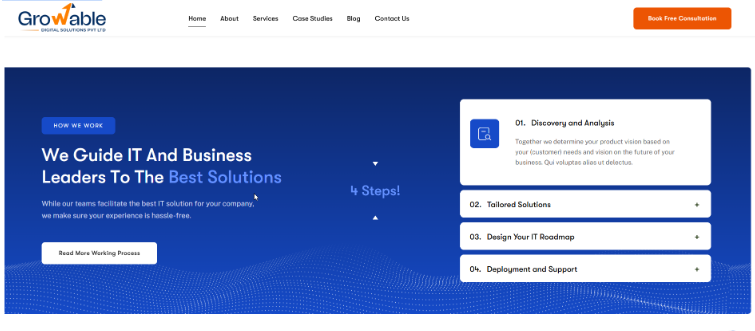
Growable Digital works with startups differently than traditional development agencies.
Instead of overengineering products early, the focus stays on:
- lean MVP execution
- scalable architecture
- AI-ready systems
- startup-focused product strategy
- rapid iteration
- long-term scalability
Whether founders are building:
- SaaS platforms
- AI products
- marketplaces
- automation tools
- custom software
- startup web applications
Growable Digital helps startups move from idea to scalable product without unnecessary complexity.
The goal is not just launching software.
It’s building products users actually want.
If you want a deeper breakdown of MVP strategy, costs, timelines, SaaS development, startup scaling, and custom software planning, check out Growable Digital’s complete guide on:
FAQs About Building an MVP for Startups
What is an MVP in startups?
An MVP, or Minimum Viable Product, is the simplest version of a product that solves a real user problem while allowing startups to validate demand before full-scale development.
How do startups build an MVP?
Startups typically build MVPs by:
- validating ideas
- researching users
- prioritizing core features
- designing workflows
- developing lean functionality
- launching quickly
- improving through feedback
How much does it cost to build an MVP?
MVP development costs vary based on complexity. Most startup MVPs range between $10,000 and $100,000+ depending on features, AI integrations, scalability, and development teams.
How long does MVP development take?
Simple MVPs may take 4–8 weeks, while larger SaaS or AI MVPs often take 3–6 months.
What features should an MVP include?
An MVP should only include features essential to solving the core user problem. Extra features can usually wait until after validation.
Should startups use no-code tools for MVPs?
No-code tools work well for prototypes and early validation, but many startups eventually require custom development for scalability and flexibility.
Can AI help build MVPs faster?
Yes. AI tools can accelerate coding, automation, testing, research, and product workflows significantly.
Why do startups fail during MVP development?
Common reasons include:
- overbuilding
- poor validation
- feature overload
- weak UX
- hiring inexperienced developers
- ignoring scalability
What is the difference between an MVP and a prototype?
A prototype demonstrates product ideas visually, while an MVP is a functional product users can actively use.
Should founders hire freelancers or companies for MVP development?
Freelancers may work for smaller projects, but companies often provide stronger product strategy, scalability planning, and cross-functional support.
What is SaaS MVP development?
SaaS MVP development focuses on building lean versions of subscription-based software products for early validation and user testing.
How do startups validate ideas before development?
Validation methods include:
- landing pages
- waitlists
- customer interviews
- surveys
- fake door tests
- beta communities
Why is custom MVP development important?
Custom MVP development provides greater flexibility, scalability, ownership, and product differentiation long-term.
What is the best MVP development company for startups?
The best MVP development company understands startup speed, validation, scalability, UX, and long-term product growth not just coding alone.

Prince K Dubey
Warning: Trying to access array offset on false in /home/u971387193/domains/growabledigital.com/public_html/wp-content/themes/safebyte/inc/classes/class-blog.php on line 220